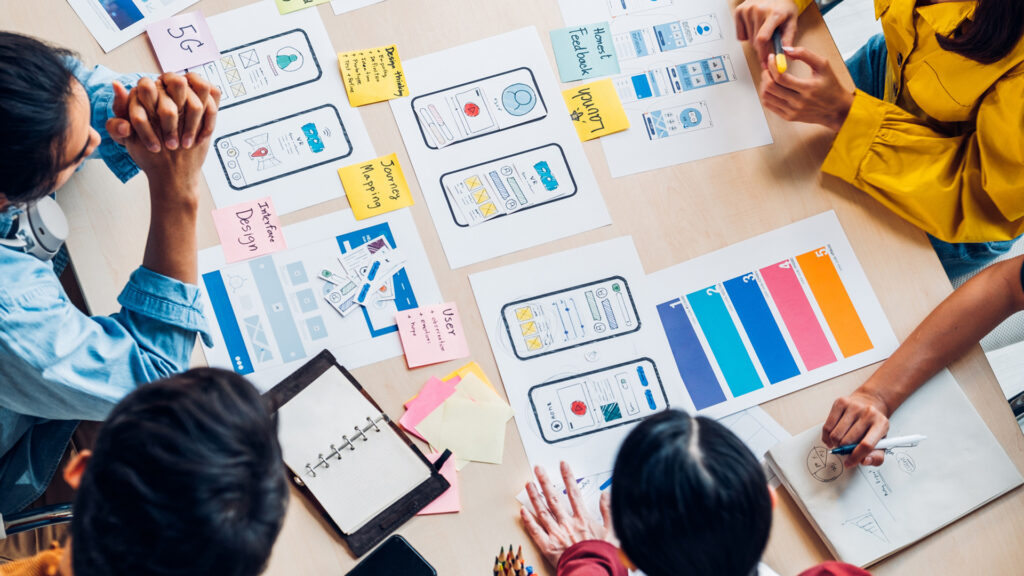
In today’s ever-evolving digital landscape, the success of a product is no longer determined by its technical excellence alone. The line between design and development has blurred, and for good reason. Businesses that excel today are those that embrace a design-driven approach to product engineering, where UX designers and development teams work hand-in-hand to co-create solutions that are both functional and delightful.
This collaboration goes beyond wireframes and code. It’s about aligning vision, understanding user needs, solving real problems, and delivering value at every touchpoint. Let’s explore how this approach is redefining digital product success and why it should be at the core of your business strategy.
Design Is No Longer a Phase-It’s a Mindset
Gone are the days when design was a decorative layer added after development. Today, design drives the entire product lifecycle from ideation and prototyping to launch and iteration.
Designers bring empathy, user research, and journey mapping to the table, helping teams understand the “why” behind a product. Developers, on the other hand, bring technical feasibility and architectural thinking. When both come together early in the process, the outcome is a product that works seamlessly, solves real problems, and feels intuitive to users.
This alignment ensures:
- Fewer revisions and less rework
- Faster time-to-market
- Improved usability and accessibility
- Increased user satisfaction and retention
The Power of Co-Creation Between UX & Dev Teams
Design-driven product engineering flourishes when design and development teams collaborate as equals, not in silos. This collaboration isn’t just about communication, it’s about co-creation.
Here’s how UX and dev teams co-create:
1. Shared Understanding Through Discovery Workshops
UX and dev teams align from the very beginning through discovery workshops, where they define the problem, map out user journeys, and identify constraints and opportunities. This phase ensures everyone is on the same page before a single line of code is written.
2. Design Systems & UI Kits for Efficiency
Designers create reusable components, UI kits, and design systems, which developers can implement with consistency. This speeds up the development process while preserving visual coherence across the product.
3. Rapid Prototyping & Iteration
Instead of waiting for the final designs, dev teams can work on interactive prototypes, helping validate features early. Iteration becomes smoother when both teams are part of the feedback loop.
4. Continuous Feedback & Refinement
Designers review built features to ensure visual fidelity and user experience, while developers provide feedback on performance, feasibility, and scalability. The result? A polished product that meets both user expectations and technical standards.
Design-Driven Engineering Builds for People, Not Just Performance
Yes, speed and performance matter. But users remember how a product made them feel, not just how fast it loaded.
When UX and engineering teams collaborate deeply:
- Accessibility is prioritized, not added later.
- Micro-interactions and animations are meaningful, not distracting.
- Onboarding flows are smooth, not overwhelming.
- Complex actions feel simple and human.
Design-driven engineering ensures that products are not just usable, but valuable, engaging, and enjoyable.
Case in Point: Think Beyond Features
Let’s say you are building a health-tracking app. A developer might focus on capturing metrics, syncing devices, and building dashboards. A designer might focus on how the user navigates, understands progress, and stays motivated.
Together, they might discover:
- Users need gentle nudges and reminders, not data overload.
- Progress needs to be visualized through positive feedback.
- Color usage must support color-blind users.
This unified approach results in a product that fits naturally into people’s lives and keeps them coming back.
The Role of Product Managers as the Bridge
In a design-driven environment, product managers play a crucial role in aligning UX and engineering with business goals. They ensure that the product vision is maintained, timelines are respected, and that trade-offs are made with user value in mind.
When product managers encourage collaboration and create space for both creative and technical input, the result is a product that not only meets requirements but exceeds expectations.
When UX Leads, Dev Builds with Confidence
A well-thought-out UX plan empowers developers to build without second-guessing. It reduces ambiguity and provides a roadmap for interaction, behavior, and user feedback.
Likewise, developers can offer technical insights that help designers avoid ideas that are too complex or heavy. Together, they find creative solutions within constraints, the sweet spot of innovation.
Challenges of Collaboration and How to Overcome Them
While collaboration between UX and dev teams brings immense value, it doesn’t happen automatically. Teams need:
- Clear communication channels (Slack, Jira, Figma, GitHub)
- Defined processes and workflows
- Mutual respect for each other’s expertise
- Time for shared reviews and sprint planning
When companies invest in collaborative culture, they unlock the full potential of their design and engineering talent.
It’s Not a Handoff. It’s a Partnership
At Apoxeo, design and development should walk together, not pass the baton back and forth. We create environments where developers contribute to design discussions, and designers are part of build cycles.
This synergy fuels creativity, strengthens accountability, and leads to products that truly resonate with users.
Final Thought: Build with Heart and Logic
Design-driven product engineering is not just a methodology; it’s a mindset of empathy, creativity, and precision. When UX and development teams truly collaborate, they build more than just features; they build experiences that matter.
At Apoxeo, we embrace this human-centered approach to product development. Whether you’re launching a new app or refining an existing platform, we bring together strategy, design, and technology to create digital products that make an impact.
FAQs
Why is collaboration between UX designers and developers important?
Collaboration ensures that the product is both technically sound and user-friendly. It bridges the gap between usability and performance, resulting in a more complete and successful product.
How does design-driven product engineering reduce time to market?
By aligning UX and development early in the process, fewer revisions are needed. Teams work more efficiently with shared goals, saving time and avoiding costly rework.
Can developers contribute to UX decisions?
Absolutely! Developers offer technical insights and feasibility assessments that can refine UX ideas. Their perspective helps shape practical, scalable designs.
What tools can facilitate better UX-dev collaboration?
Tools like Figma, Zeplin, Jira, and Slack help designers and developers communicate, share assets, provide feedback, and stay aligned throughout the project lifecycle.
How do design systems help in product engineering?
Design systems ensure consistency, speed up development, and reduce confusion. They give developers ready-to-use components aligned with design principles, improving scalability and maintainability.